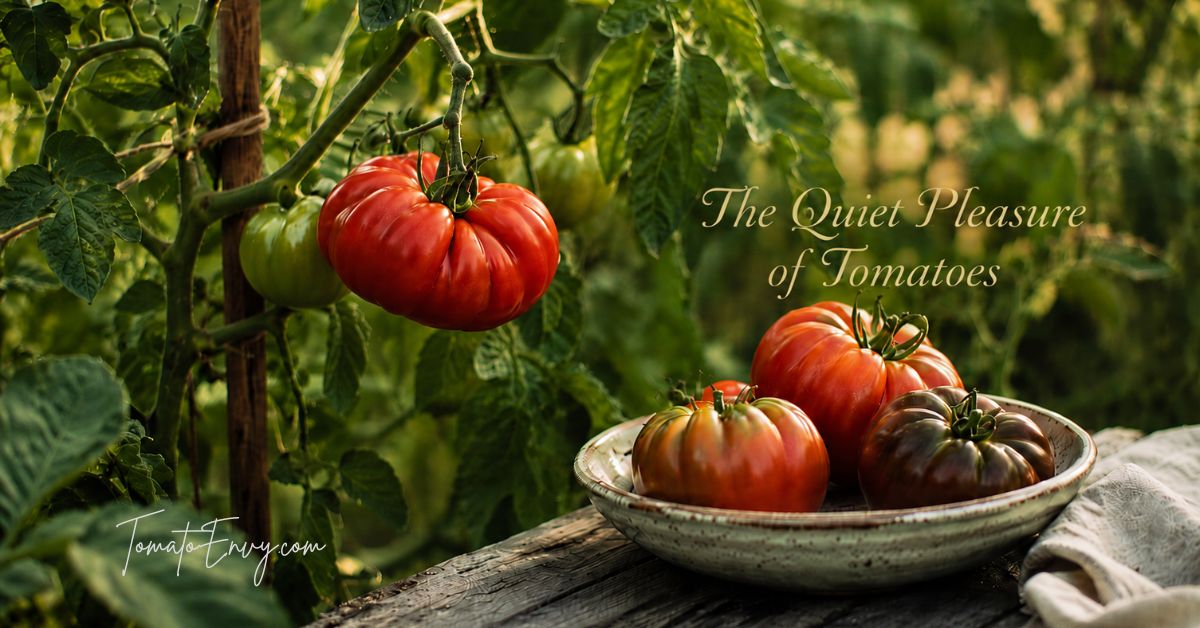
Tomatoes ask for patience before they give you anything. A seedling in May looks almost foolish, all stem and hope, leaning toward the light as if it has heard a rumor about summer.
I love tomatoes. I love growing them and eating them. That sounds simple, and maybe it is, but the older I get, the more I trust simple things. A tomato plant gives you work to do with your hands, something to check in the morning, something to worry over, and, if you are lucky, something warm and red to hold before lunch.
There is a particular satisfaction in growing food you actually crave. I have grown things because they were useful, or pretty, or because someone said they were easy. Tomatoes are different. I grow them because I want them. I want the smell of the leaves on my fingers. I want the little yellow flowers. I want the first green fruit hiding under the foliage, round and secretive as a marble in a drawer.
The smell of the plant
A tomato plant has its own weather. Brush against it, and the air changes. The scent is sharp, green, and almost peppery, the kind of smell that does not politely remain in the garden. It follows you inside. It clings to your wrists. It makes the kitchen feel closer to the dirt.
That smell is one of the reasons I grow them. Store-bought tomatoes can be fine, and sometimes better than fine, but the plant itself belongs to the gardener. The vine, the soil, the tied-up stems, the anxious glances after heavy rain, the small act of pinching back what does not need to be there. These are not chores exactly. They are a way of paying attention.
Growing tomatoes slows the day down. You notice whether the leaves are curling. You notice the weight of a branch. You notice if one fruit has started to blush overnight, the faintest red spreading across its skin like a private thought. Nothing happens all at once, and then suddenly something has happened.
This is the bargain tomatoes make. They require fussing, but not in a fussy way. Water too much, and they sulk. Water too little, and they punish you. Ignore them for too long, and the weeds move in. Still, they are generous plants. Give them sun, decent soil, and a little structure, and they will try hard for you.
I respect that.
The first tomato
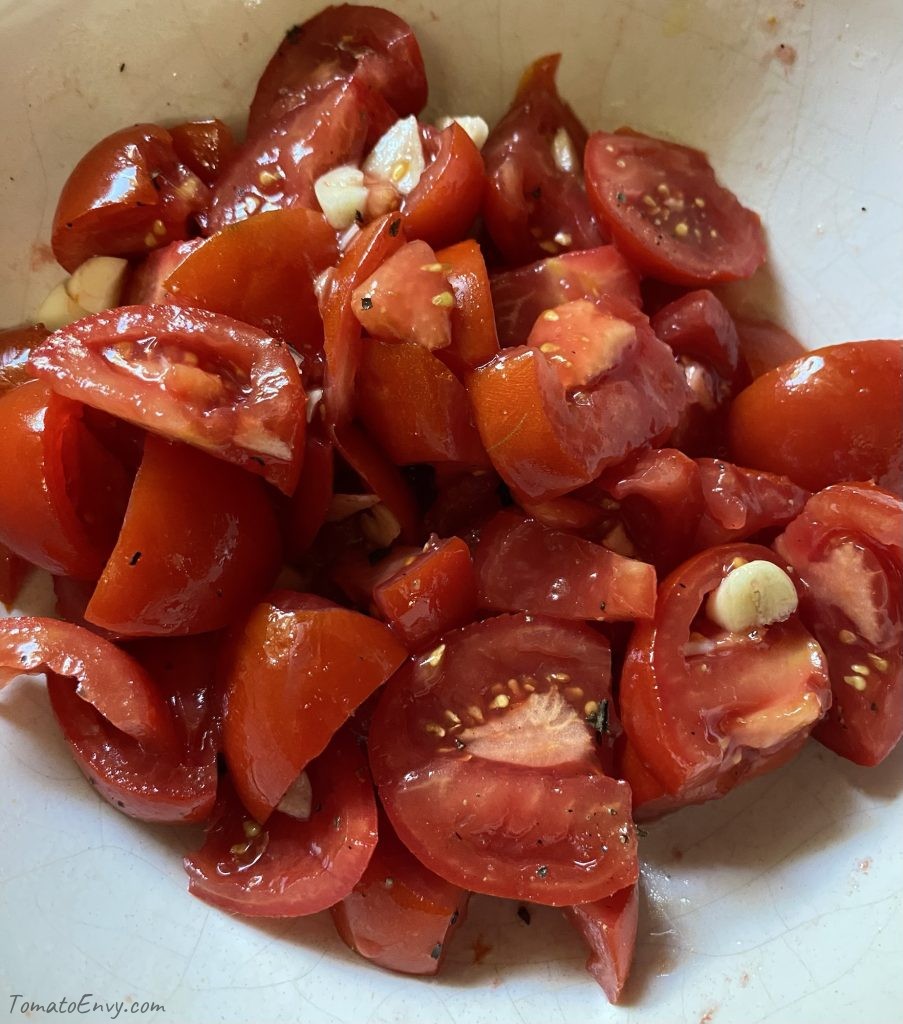
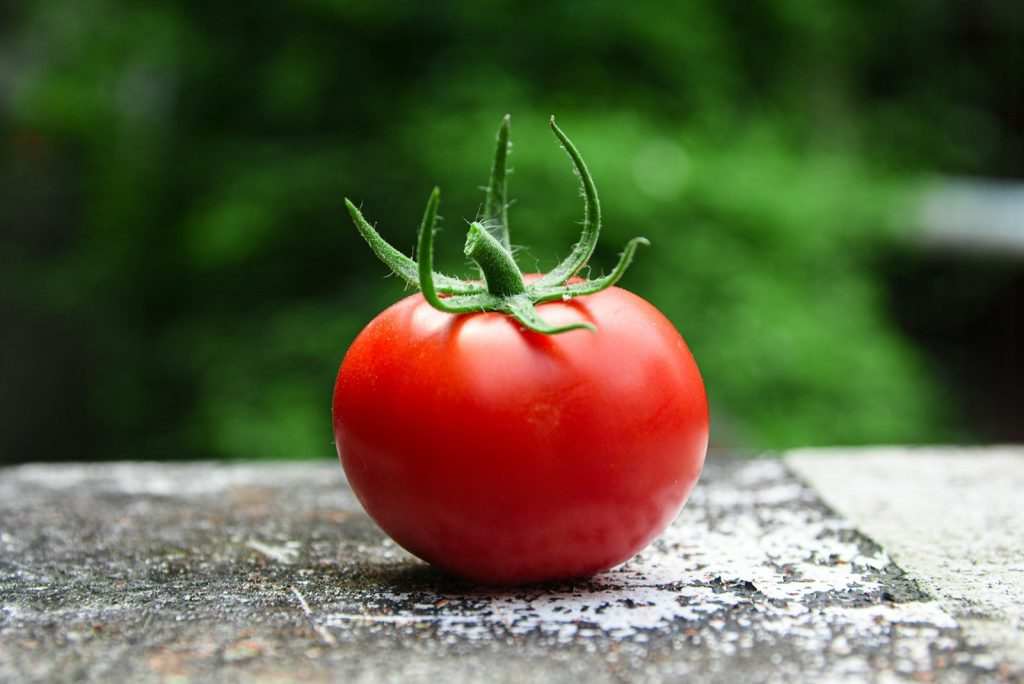
The first tomato of the season should not be rushed. It deserves a knife, a plate, and a little quiet. I like the weight of it in my hand, heavier than it looks, sun-warmed if I have picked it at the right moment. The skin gives slightly under the thumb. Not soft. Ready.
There are foods that need a recipe, and then there are foods that only need permission. A ripe tomato needs very little. Salt, maybe. A piece of bread. A little olive oil if the mood is right. Sometimes nothing at all. Bite into it over the sink and accept the mess.
That is part of the pleasure. A real tomato is not tidy. It has juice, seeds, pulp, and a kind of cheerful collapse. It stains the cutting board. It runs into the grooves of a plate. It reminds you that food once had weather inside it.
I think that is why tomatoes feel different from so many other things we eat. They still seem connected to the day they came from. Heat sits in them. Rain, too. The good ones taste like an argument between sugar and acid, and neither side quite wins.
That balance is what keeps me coming back. A tomato can be bright, deep, mild, tart, meaty, delicate, or almost smoky. Cherry tomatoes taste like little sparks. Beefsteaks feel extravagant, the kind of tomato that demands a sandwich and a napkin. Paste tomatoes are practical, built for sauce, steady as a carpenter’s hand.
Each one has a purpose. Each one has a mood.
The garden as appetite
The funny thing about growing tomatoes is that it changes how you eat them. You do not take them for granted when you have watched them arrive. You remember the tiny start in the pot, the transplant shock, the first hot week, the stake pushed into the ground, the twine tied in a knot that was probably not as neat as it should have been.
By August, the garden becomes a kind of daily negotiation. Some tomatoes are ready now. Some need one more day. Some have split after rain. Some must be rescued before the squirrels discover them. The bowl on the counter fills, and then the question becomes not whether to eat tomatoes, but how many ways can you justify eating them again.
Sliced thick on toast. Tucked into a sandwich. Chopped with basil. Cooked down until the kitchen windows fog. Folded into eggs. Eaten while standing barefoot by the counter. Given to a neighbor. Saved for dinner. Stolen before dinner.
There is abundance in tomatoes, but it is not the grand kind. It is not gold coins spilling from a chest. It is quieter than that. There are three more ripe ones on a Tuesday. It is a colander on the porch. It is the small problem of too much good fruit, which is one of the best problems a person can have.
Even the imperfect tomatoes have their place. The split one still tastes good. The lopsided one may be the sweetest. The scarred one, ugly by grocery-store standards, becomes sauce, and sauce has no memory for vanity.
Why it matters
I do not think my love of tomatoes is only about taste. It is about participation. Growing them makes me part of the meal before the meal exists. I have had some small hand in it. Not control, exactly. A garden will cure you of that idea. But involvement.
There is comfort in that. In a world that often feels sealed, processed, and already decided, a tomato plant still asks ordinary questions. Did you water? Did you look closely? Did you wait? Did you notice what changed overnight?
Those questions are good for a person.
They bring the mind back to the body. They bring the body back outside. They make the season visible. Spring is hope. Early summer is work. Late summer is a reward. September is the last sweetness, with a little sadness at the edge.
And then, finally, there is the last tomato. It sits on the counter longer than the others, not because it is better, but because it is last. You know the plant is tired. You can see it in the leaves. The garden has given what it could, and the light has begun to thin.
Still, you cut it.
The knife passes through the skin. The juice gathers on the plate. For a moment, there it is again: the seedling, the sun, the green smell on your hands, the whole summer held in one red slice.
Also published in My Voices on Medium.
© 2025 by Tomatoenvy.com All rights reserved. No part of this document may be reproduced or transmitted in any form or by any means, electronic, mechanical, photocopying, recording, or otherwise, without prior written permission.