I’ll be honest with you: oregano is the rare plant in my garden that does better when I more or less leave it alone. I fuss over the tomatoes, I babysit the seedlings, I check the lacinato kale for flea beetles like a worried parent. Oregano just sits there in the sun, asks for almost nothing, and hands me one of the most useful flavors in the kitchen.
If you grow tomatoes, you really should have oregano growing somewhere nearby, because the two of them together are the backbone of half the meals that come out of our house. So let’s get a good patch going.
Start With the Right Kind of Oregano
This trips up more people than you would think. “Oregano” is less one single plant and more a loose family of cousins, and they do not all taste the same.
The one you actually want for cooking is Greek oregano (Origanum vulgare subsp. hirtum). That is the one with the strong, peppery, unmistakably pizza-and-pasta flavor. If you want true culinary oregano, this is the one to plant.
Common oregano, plain Origanum vulgare, is milder and is often grown more as a pretty ground cover than as a kitchen herb. It is not bad; it is just sleepier on the plate. So when you are standing at the garden center, read the tag. A plant labeled only “oregano” can be a bit of a flavor gamble. If you can, crush a leaf between your fingers and smell it. A good Greek oregano practically announces itself.
Give It Full Sun and Lean Soil
Oregano is Mediterranean, and that one word tells you most of what you need to know. It wants full sun, six hours a day minimum, and it wants soil on the lean side.
This is the part that feels backwards to a lot of us. We are trained to feed our plants, to pile on the compost and the fertilizer. But oregano develops more of its flavorful oils in poorer soil. Rich, heavily fertilized beds give you a big leafy plant that tastes like almost nothing. Overly fertile soil tends to produce lots of foliage that is weak on flavor, and over-fertilizing can actually lower the essential oil content that makes the herb worth growing in the first place.
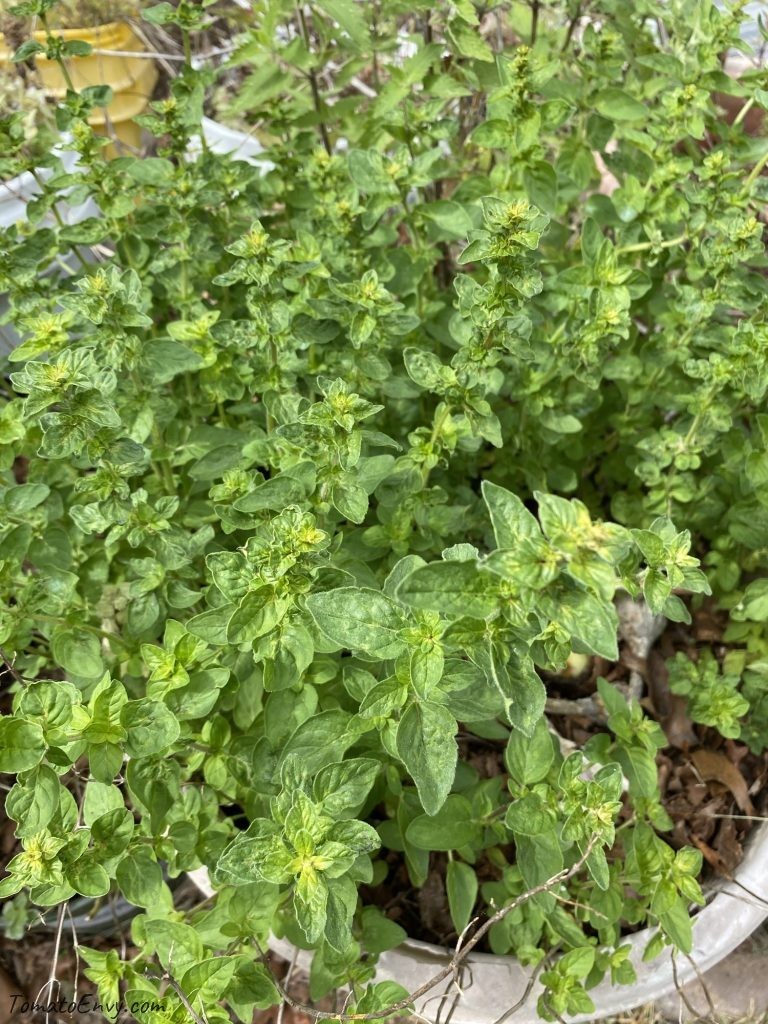
The other thing oregano insists on is drainage. It would much rather be a little too dry than sit in wet feet. If your soil holds water, work in some grit, build up a raised bed, or just grow it in a container. I am up on Long Island, and the spots that drain well are the spots where my oregano is happiest.
Do Not Overwater (I Mean It)
Once oregano is established, let it dry out between waterings. It is genuinely drought-tolerant and is far more likely to die from soggy roots than from thirst. Root rot is the main thing that kills oregano, and almost always it is kindness that does it. A new transplant needs regular water while it settles in, but after that, back off and let the plant tell you when it is thirsty.
How to Get It Started
You have a few good options here, and they are not equal.
From seed. You can start oregano seed indoors about six to ten weeks before your last frost. It works, but the seed is slow, a little unreliable, and seed-grown plants vary quite a bit in flavor. You do not always know what you are going to get.
From a transplant. This is the easy button, and it is what I usually recommend. Buy one healthy Greek oregano plant, taste-test it if you can, and you know exactly what you are bringing home.
From a cutting or a division. Once you or a neighbor has one good plant, you are basically set for life. Oregano roots readily from cuttings, and you can dig up an established clump and split it in spring or fall. Propagating by division is one of the simplest ways to get more plants for free.
When Can You Start Harvesting?
Sooner than you might think. Once your oregano is about six inches tall and has enough leaves to keep itself growing, you can start snipping. For a transplant, that usually means a few weeks after it has settled into the ground. A plant you started from seed will need a little longer to establish before you take much.
After that, the rule is light and often. A few sprigs here and there all season actually keeps the plant bushy and productive, so you do not have to wait for one big harvest to enjoy it. When you do cut, do it in the morning after the dew has dried but before the sun gets hot, which is when the leaves are at their most fragrant. Just try not to take more than about a third of the plant at once, so it always has enough left to bounce back.
Keep It Pinched and Productive
Here is the trick that keeps oregano from turning into a sad, woody sprawl: pinch it. Snip the tips regularly to keep the plant bushy, and it will keep pushing out fresh, tender growth instead of getting leggy.
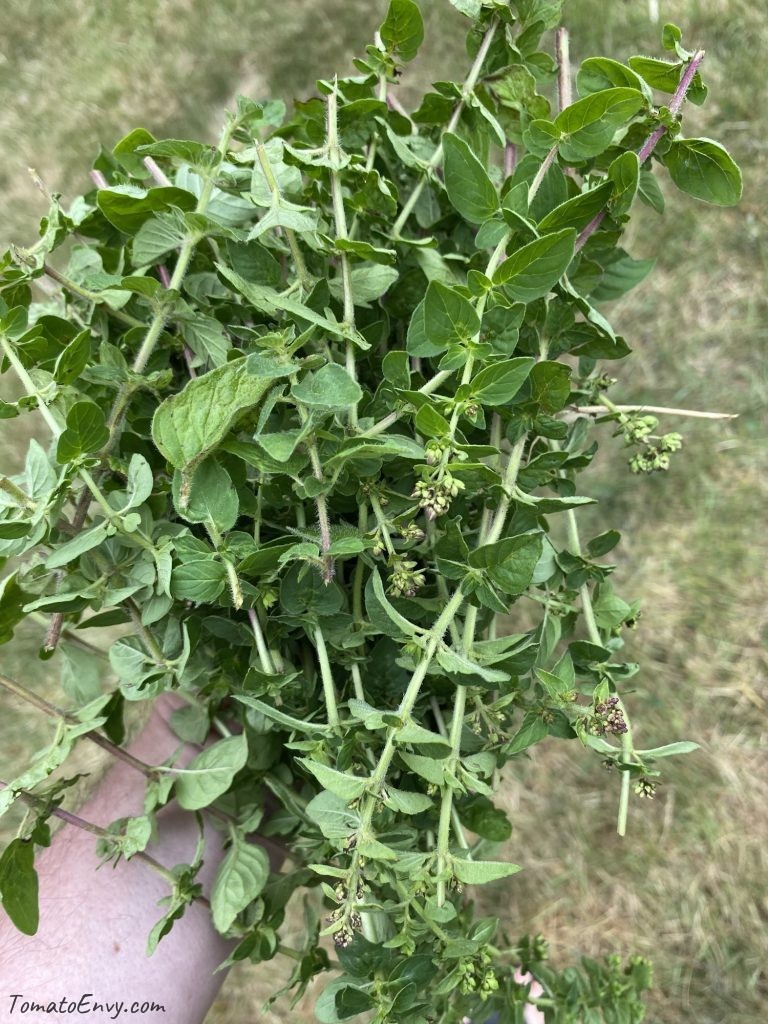
The flavor peaks just before the plant flowers, so that is the moment to cut hard if you are harvesting to dry. Cutting back the flower buds also pushes the plant to make more leaves, which is exactly what you want. You can let some of it bloom, and honestly you might want to, because the little white flowers are a magnet for bees. Just know that the leaves turn slightly bitter once the plant is flowering hard.
One more heads-up: oregano spreads. It is enthusiastic. In a mixed bed it will happily wander into its neighbors’ space, so some folks keep it in a pot just to keep the peace. And every three or four years, when the center of the plant gets old and woody, it is worth digging it up and replanting a fresh division.
Drying and Storing (Oregano’s Party Trick)
Most herbs lose something when you dry them. Oregano is the strange exception: it actually gets more potent dried than fresh. That makes it one of the most rewarding herbs to preserve.
The easiest method is to tie small bundles of stems and hang them upside down somewhere dark, dry, and airy. If you want to keep dust and stray leaves contained, tuck the bundle into a paper bag with a few holes punched in it and hang the whole thing. Skip sun-drying, which fades both the color and the flavor. Once the leaves are crisp, strip them off the stems and store them in an airtight jar out of the light. A summer’s worth of trimmings will season your kitchen straight through winter.
Now Go Cook With It
This is the payoff, and it is why oregano earns its spot next to the tomatoes.
Oregano and tomato are one of those pairings that just works. A good handful, fresh or dried, transforms a simple pan of tomato sauce. It is fantastic rubbed onto a steak before it hits the grill, especially alongside a fresh tomato salsa. And it loves eggplant, zucchini, and pretty much every roasted summer vegetable you can name. I am firmly of the opinion that no Greek-style salad is allowed to leave our kitchen without a generous pinch of it.
The best part of growing your own is that you stop measuring. You walk out the back door, snip what you need, and the flavor is so much brighter than anything from a jar that you will wonder why you waited so long.
So plant a little oregano this season. Give it sun, lean soil, and not much else. It will quietly become one of the most useful things in your whole garden.
© 2026 by TomatoEnvy.com. All rights reserved. No part of this document may be reproduced or transmitted in any form or by any means, electronic, mechanical, photocopying, recording, or otherwise, without prior written permission.
Disclaimer: This article is for general gardening and informational purposes only. Growing conditions vary by region, soil, and climate, so results may differ in your own garden. Always confirm plant hardiness and care guidance for your specific area before planting.